Tag Archives: Greta Gerwig

Box Office Report: ‘Thor: Ragnarok’ hammers home fourth largest debut of 2017

After a few slow weekends, the box office has been reinvigorated by the God of Thunder. The Taika Waititi-directed, Chris Hemsworth-starring Thor: Ragnarok took home an estimated $122.744 million in its opening weekend, which is the 4th largest debut of 2017 and the 7th largest of the MCU. The film has already made over $430 million worldwide, which means, on a budget of $180 million, the film is already and will continue to be a massive financial success. The first two Thor films ended, respectively, at $181 and $206 million domestically — numbers that Ragnarok will far surpass.

In second, and over $100 million less than first place, was A Bad Moms Christmas, with an estimated $17.03 million. The film actually opened on Wednesday, and it’s total since opening is $21.55 million. On a budget of $28 million and riding the success of the first Bad Moms film, this second in the series — strangely released over a month before Christmas — will still likely make its money back despite the rather poor critical standing of 31% on RottenTomatoes.

Spots three through nine remain in the same order as the previous weekend — JigsawBoo 2!GeostormHappy Death DayBlade Runner 2049Thank You for Your Service and Only the Brave.

While most other box office stories don’t say much that already hasn’t been said, Greta Gerwig’s Lady Bird soared onto the scene with a 2017 box office record. While Lady Bird only opened in four theaters across the country, the film made a per-theater-average of $93k, which is 2017’s best, beating The Big Sick‘s 5 theater-$84k PTA. As the film continues to expand — it goes wide over the Thanksgiving holiday — it’s likely that it will find similar financial success as Kumail Nanjiani’s romantic comedy, which could then fuel the momentum behind the film as a serious awards contender.

*All weekend numbers are domestic, meaning that they’re from theaters in the US and Canada, and are also estimates, reported by Box Office Mojo, with actuals coming out in the next few days.*


Featured image via Marvel.

Revising Oscar nominations from 2010-2016

Whenever Andrew Garfield appears in a film — Garfield’s most recent, Breathe, released this past weekend, and he’s getting Oscar buzz for his performance — it’s hard not to think about how he should’ve been nominated for his supporting role in The Social Network.

And once that ball gets rolling, it’s hard not to think about the other painful snubs across the past few years, of which there are plenty.

The Academy Awards will never, ever get it completely right, but sometimes they get it so wrong that, even years later, we’re still talking about it. Here are a few per year since 2010:

2010

Best Director
Insert: Christopher Nolan, Inception
Remove: David O. Russell, The Fighter

Warner Bros./Courtesy

Inception is one of the best and most significant blockbusters of the 21st century, an unparalleled vision composed with such perfect precision by director Christopher Nolan. The fact that this film works not only on a conceptual level, but also on a story level, is a feat that’s still under-appreciated today. But the technical craftsmanship is too obvious for Nolan’s omission to be understandable at all. While The Fighter is a good film, a really good one even, it’s no match for the achievement of Inception.

Best Supporting Actor
Insert: Andrew Garfield, The Social Network
Remove: Jeremy Renner, The Town

Columbia/Courtesy

Jeremy Renner is just fine in The Town. Is he Oscar worthy? Not entirely. How the Academy overlooked Andrew Garfield’s amazingly committed turn as Eduardo Saverin in The Social Network is shocking. Garfield is the heart of that film, embodying the source of its fascination and the weight of its humanity — a far more impressive accomplishment than even the film’s lead, Jesse Eisenberg, who was nominated. When we think of the powerhouse scenes, we think of Garfield’s high intensity back-and-forths with the rest of the actors portraying Facebook founders, an intensity that is almost wholly missing without him. Garfield should’ve even competed for the win, and could’ve taken it had Christian Bale been correctly nominated in the lead category for The Fighter.

2011

Best Director
Insert: Bennett Miller, Moneyball
Remove: Woody Allen, Midnight in Paris

Columbia/Courtesy

Bennett Miller was nominated for Best Director for Foxcatcher. While that was deserved, his best directing job came with Moneyball. Similar to Adam McKay with The Big Short, Miller takes a niche and incredibly complex topic — baseball statistics and their implementation by the front office — and renders it palatable and human. The control of tone, the fluidity of pace and the composition of scenes — the trading for Ricardo Rincon comes to mind — are all signs of a director at his most refined. And while Brad Pitt did deserve a Best Lead Actor nomination, it’s Bennett Miller who makes the character of Billy Beane so utterly affecting. The juxtaposition of flashbacks, the editing and more all define the character of Beane in ways that other directors should study. Woody Allen may have deserved a spot on an objective, merit-based level, but Hollywood has to realize that the Oscars aren’t just based on merit. The Oscars celebrate figures, artists, and Allen is not one who should be celebrated.

Best Original Screenplay
Insert: Will Reiser, 50/50
Remove: Woody Allen, Midnight in Paris

Summit Entertainment/Courtesy

The reasons to remove Allen are the same. Will Reiser, writer of the Joseph Gordon-Levitt and Seth Rogen comedy-drama about cancer, would be next in line, and arguably deserved a spot anyway. The year offered a nomination to Kristen Wiig and Annie Mumolo for the comedy Bridesmaids, and rightfully so, but 50/50 is just as brilliant of a script. The comedy is sharp, the plotting is incredibly spirited and the character work is powerfully vulnerable. It’s a comedy that realizes that horrible situations need humor, that they often spark humor, and that that humor comes from a very human place.

2012

Best Picture
Insert: The Master
Remove: Les Misérables

Annapurna/Courtesy

It was difficult to see how Paul Thomas Anderson could follow up There Will Be Blood, easily one of the greatest films of the 21st century and possibly ever. At first, many felt that he whiffed with The Master. But looking back, one can quickly realize that, somehow, The Master comes close to TWBB. A seering, haunting, strange and mesmerizing look at (allegedly) scientology, the film is a masterpiece on every front, a distinctly American tale that melds the best of prestige, arthouse and flare while remaining unpretentious. The screenplay is one of the most intelligently crafted of recent memory, with scientology’s ideology deeply rooted in every single detail, and the duo of Joaquin Phoenix and the late Philip Seymour Hoffman is genuinely unmatched, with Phoenix’s performance seriously rivaling Daniel Day-Lewis’ in PTA’s previous film. Evidently, it didn’t need recognition for us to come to this current conclusion of its greatness, but it’s a bit silly to suggest that Les Misérables is in the same league.

Best Director
Insert: Kathryn Bigelow, Zero Dark Thirty
Remove: David O. Russell, Silver Linings Playbook

Columbia/Courtesy

Kathryn Bigelow won Best Director for The Hurt Locker. She deserved it. And then she followed that up with as viscerally affecting of a film in Zero Dark Thirty. She didn’t even get nominated. David O. Russell did just fine with Silver Linings Playbook, but no where in that film is there anything special about its direction. With Zero Dark Thirty, Bigelow traverses years, complex political machinations, an unbelievable character arc and one of the most tense military operations of our time, and pulls each aspect off in such expert fashion. It’s a film that showcases the best of her directorial chops, not for their own sake, but for the sake of the film itself.

2013

Best Picture
Insert: Fruitvale Station
Remove: Philomena

Forest Whitaker’s Significant Productions/OG Project/Courtesy

Oscar bait is a problematic term that shouldn’t be used. It’s difficult to find the right phrase to replace it. Whatever it is, though, Philomena is a film that represents it. It’s a fine movie, an enjoyable one, a harmless one, one that tells an emotional true story. But there’s nothing about the film that makes it one of the 10 best of its year, and it’s infuriating how the Academy, time and time again, goes for this kind of safe, standard and, quite honestly, boring type of picture. The best films of the year — granted, a problematic term itself — shouldn’t necessarily go to the most well-polished, but rather to the films that transcend the art. And Fruitvale Station is, undoubtedly, one of those films. Recounting the day leading up to the tragic killing of Oscar Grant by police, Ryan Coogler’s directorial debut breathes with life. It clearly has a message, but it injects that message into the veins of the film, bases and builds it organically, crafting empathy, joy and intimacy with such pressing reality. We’re not told an idea up front or too explicitly, but when we encounter that harrowing, soul-crushing final act, we understand it, without needing to say anything. The life built into the film vanishes, purposefully, and we’re moved in intangible ways. Coming a year after the killing of Trayvon Martin, Fruitvale Station is a necessary film that should be remembered, and the type of film the Oscars need to start recognizing if they actually want to honor the art of film.

Best Lead Actor
Insert: Oscar Isaac, Inside Llewyn Davis
Remove: Christian Bale, American Hustle

CBS Films/Courtesy

It’s hard to remove Christian Bale, one of the best and most dedicated actors of our time. And in most other years, we couldn’t remove him. Yet, there are quite a few performances in 2013 that deserved that final spot more than he did. Tom Hardy in Locke is one of them. But Oscar Isaac in Inside Llewyn Davis is one that not only should’ve been nominated, but one that should’ve made a serious run for the win. His character, Llewyn Davis, is a grumpy, tired asshole, which makes it so shocking that he ends up being one of the most soulful and human we’ve seen this decade. That’s all Oscar Isaac. Isaac brings a tired physicality, one that can be tangibly understood and seen in his body and his face, in the tonal quality of his voice. And not just that — Isaac performs his own songs, not only bringing immense musical talent but thoroughly adapting the character of Davis musically. Like The MasterInside Llewyn Davis is a distinctly American film, and like Joaquin Phoenix’s work, Isaac’s performance elevates that quality immeasurably, defining a face of the American psyche.

2014

Best Lead Actor
Insert: Jake Gyllenhaal, Nightcrawler
Remove: Benedict Cumberbatch, The Imitation Game

Open Road Films/Courtesy

Benedict Cumberbatch is great in The Imitation Game, and offers a performance that makes it hard to imagine anyone else in the role. Removing him here doesn’t deny any of that. It simply recognizes that Jake Gyllenhaal’s transformation for Nightcrawler is one of the best of the 21st century. Other than hairstyling, Gyllenhaal looks like himself in the movie. And yet, as Lou Bloom, we see nothing of the actor, and that’s because the transformation is of every facet of acting. Gyllenhaal’s tonal level isn’t changed, but his vocal pacing is entirely intrinsic to the character. His bulging eyes, quick movements and physical rapport with other actors are not only invasively terrifying, crafting awe-strikingly gripping scenes, but they’re informative of who the character is — such detailed work only the most masterful actors pull off. Nightcrawler is both a character study and a film about the terrible culture of video news, but those two aspects compliment and augment each other, and because of Jake Gyllenhaal’s performance, every bit of its collective impact is enhanced.

Best Director
Insert: Ava DuVernay, Selma
Remove: Morten Tyldum, The Imitation Game

Paramount/Courtesy

While we don’t have to deny how good Cumberbatch is in his film, we must refute any association of Morten Tyldum with the Best Director category. The Imitation Game is a fine film. It’s a crowd-pleaser. But it’s unfortunately reserved, and otherwise standard, suppressing a lot of the humanity that is actually there in this story. A film that is not reserved nor standard, and elevates its humanity, through the work of its director, is Ava DuVernay’s Selma. The technical craftswomanship here is stunning, with bone-shakingly rousing scenes of both action and conversation. There’s a liveliness, a humanity that’s extended to each facet of filmmaking — a testament to her guiding hand. On the intangible side, though, DuVernay’s grasp of the spirit at the story’s core can be felt in every scene, doing such profound justice to such an important story.

Best Animated Feature
It should’ve won: The LEGO Movie

Warner Bros./Courtesy

The audible gasps at the announcement ceremony when The LEGO Movie was not nominated for Best Animated Feature will haunt us indefinitely. If it was rules that caused its omission, as the film did feature a few live-action scenes, screw the rules. However, we don’t even want to think of what the reason might be, though, if not rules. Thankfully, everyone already knew that the film was the best animated picture of 2014, even before nominations. So there’s no case that needs to be made other than to point it out, and keep pointing it out.

2015

Best Supporting Actress
Insert: Alicia Vikander, Ex Machina
Remove: Rachel McAdams, Spotlight

A24/Courtesy

Rachel McAdams may be impressively committed in Spotlight. And if Alicia Vikander’s Oscar-winning performance in The Danish Girl was rightfully nominated in the Best Lead Actress category, removing McAdams would be unnecessary. That’s all semantics, however, as, regardless, Alicia Vikander’s other performance of 2015, as the AI Ava in Ex Machina, deserved a nomination. It may have gone unrecognized due to the artifice of the character hiding the true merit of the performance, but her turn is so utterly controlled and precise, nuanced and minutely accentuated in service of that artifice. Similar to Domhnall Gleeson’s character in reaction to Ava, we don’t immediately recognize the immense complexities of Vikander’s performance, and that’s purposeful. Ideally, Vikander would’ve won the lead category for The Danish Girl and the supporting category for Ex Machina. But ignoring a nomination for the latter altogether is frustratingly puzzling.

Best Supporting Actor
Insert: Idris Elba, Beasts of No Nation
Remove: Mark Ruffalo, Spotlight

Netflix/Courtesy

How does an actor win the SAG, but not even get nominated at the Oscars? Well, sadly for Idris Elba, forces outside of the film and his performance resulted in that. At the time, Netflix was rather new to film production/distribution, with Beasts of No Nation being its first fictional narrative endeavor, and many hated the idea of what the streaming company might do to the film industry. While it’s technically speculative, those factors likely pushed Elba out. In a just world, though, Elba is inarguably nominated. His command of the screen is transfixing, his definition of character quite tragic. As much as we find heart, the humanity impacted by these wars, in lead actor Abraham Attah, we find the other end of that heart in Elba, a quality formed by his unforgiving take. It’s a performance we must encounter uncomfortably, but one we understand as necessary by the end of the film.

Best Adapted Screenplay
It should’ve won: Aaron Sorkin, Steve Jobs

Universal/Courtesy

Some contend with the portrayal of its central figure, but it’s ridiculous to ignore the brilliance of Aaron Sorkin’s Steve Jobs screenplay. The dialogue is arguably Sorkin’s best, rapidly sharp and biting, reminiscent of The Social Network, yet wholly organic to the subject matter. The control of character and the composition of the many face-offs with the likes of Steve Wozniak and John Sculley are dynamic, electric and spellbinding. The script truly shows how there’s no one quite like Sorkin, and it does everything that The Big Short screenplay does, yet even more polished. How it was not even nominated will forever be a mystery.

2016

Best Lead Actress
Insert: Amy Adams, Arrival
Remove: Meryl Streep, Florence Foster Jenkins

Paramount/Courtesy

Florence Foster Jenkins is a problematic film, wholly unaware of the white privilege at its core and played for sympathy in rather off-putting ways. And Meryl Streep isn’t even good in it! It’s hard to call the performance impressive and impossible to point to any of her scenes as particularly engaging. It’s so bad that it makes the snub of Amy Adams even more difficult to stomach. In Arrival, Adams is tender and unknowing, lively and explorative. We sense something so real about her character’s bravery, and feel such raw, overwhelming heartbreak at her monologue in the final act. Adams doesn’t have a powerhouse scene of direct, overt emotion, but she delivers so many subtle scenes that are just as moving precisely because we can feel so much weight in what’s withheld and beneath the surface. Arrival is an incredibly important film about the need for communication, empathy and love, but it wouldn’t be that in its entirety without Amy Adams embodying each aspect.

Best Supporting Actress
Insert: Greta Gerwig, 20th Century Women
Remove: Octavia Spencer, Hidden Figures

A24/Courtesy

Greta Gerwig’s performance in 20th Century Women can be defined by many of the same qualities of Amy Adams’ performance — tender, unknowing, lively, explorative. Her character’s power comes from this willingness to embrace life in ways others don’t, toned simultaneously by a courage to take hold of life’s potential and by an honest vulnerability when some of that potential is taken away from her — all coming, distinctly and lovingly, from the eyes of an American woman in the 70s. Gerwig delivers a full picture of her character and is quite mesmerizing throughout. Octavia Spencer isn’t bad in Hidden Figures — she’s never not brilliant in anything — but, in terms of acting, there’s just not enough there to genuinely warrant the nomination over Gerwig. In a career full of wonderful performances, Gerwig’s turn in 20th Century Women might just be her best.


Featured image via Columbia Pictures.

2018 Oscar Predictions: Best Director

Christopher Nolan finally got his long awaited first Oscar nomination for Best Director, almost a decade overdue after being snubbed for 2008’s The Dark Knight. In fact, Nolan should be on his third nomination, as he was also snubbed for Inception.

And while he deserves to win (and in this writer’s opinion, it shouldn’t even be close), he won’t. He’s the one that could put up the biggest fight, but there’s a clear favorite.

Guillermo del Toro has won both the BAFTA award and the Directors Guild of America award, the two massive indicators that all but tie a bow on this race.

The Nominees
Christopher Nolan — Dunkirk
Guillermo del Toro — The Shape of Water
Paul Thomas Anderson — Phantom Thread
Jordan Peele — Get Out
Greta Gerwig — Lady Bird

Will win: Guillermo del Toro — The Shape of Water
Could win: Christopher Nolan — Dunkirk
Should win: Christopher Nolan — Dunkirk
Should’ve been nominated: Luca Guadagnino — Call Me by Your Name


Featured image via Fox Searchlight Pictures.

2018 Oscar Predictions: Best Original Screenplay

This category is very tough to work out. Martin McDonagh won the BAFTA award and the Golden Globe in this category, but one could suggest that BAFTA is more British-leaning (McDonagh is British) and that the Golden Globes don’t matter too much (because they don’t). Jordan Peele won Critics’ Choice award, which has lined up plenty with the Oscars in this category, as well as the WGA award; although, McDonagh wasn’t eligible to compete for the WGA award as he’s not part of the organization, so it’s difficult to tell whether or not Peele’s win puts him ahead of McDonagh.

I’m going to lean toward Jordan Peele, mostly because of the WGA win, but also because of the Critics’ Choice parallel and the fact that I think it’s the best nominated original script (and I believe that the Academy mostly gets this category right). And while McDonagh won the BAFTA, Peele also received a Best Director nomination, something that could boost his chances in this category. McDonagh did not receive a director nomination.

It’s tough to eliminate Lady Bird, though, especially because of how prevalent and prominent of a figure Greta Gerwig has been throughout the awards season. If Lady Bird could jump back into contention anywhere, it would likely be here.

Finally, don’t completely rule out Guillermo del Toro and Vanessa Taylor for The Shape of Water, as its widespread love will send votes to this category.

The Nominees
Jordan Peele — Get Out
Greta Gerwig — Lady Bird
Martin McDonagh — Three Billboards Outside of Ebbing, Missouri
Emily V. Gordon, Kumail Nanjiani — The Big Sick
Guillermo del Toro, Vanessa Taylor — The Shape of Water

Will win: Jordan Peele — Get Out
Could win: Martin McDonagh — Three Billboards Outside of Ebbing, Missouri
Should win: Jordan Peele — Get Out
Should’ve been nominated: Paul Thomas Anderson — Phantom Thread


Featured image via Universal Pictures.

Independent film studio A24 is a powerhouse that just won’t stop

In 2013, A24 made waves promoting the wild indie film Spring Breakers, even going so far as to launch an Oscar campaign for James Franco with the slogan “Consider this sh*t.” Immediately, they were different. Immediately, they were refreshing.

In 2014, A24 distributed critical gems still talked about today. Most notably among them were Enemy, Under the Skin, Locke, Obvious Child and A Most Violent Year.

In 2015, A24 didn’t just stick its foot in the Oscar door — it shoved it open and sweeped nametags off the table to make a spot for itself. Ex Machina won Best Visual Effects. Brie Larson won Best Lead Actress for Room. Amy won Best Documentary Feature. And they still made other darlings: Slow West, While We’re Young and The End of the Tour.

In 2016, A24 made history, as Moonlight won Best Motion Picture, making it the first film with an all-black cast and the first LGBTQ+ film to do so.

David Bornfriend/A24/Courtesy

Its other films that year continued to expand how we perceive cinema. The Witch further defined the contemporary horror film. Krisha introduced us to Trey Edward Shults. Green Room reminded us of Jeremy Saulnier. 20th Century Women made the word “sublime” tangible. And The Lobster and Swiss Army Man are two of the most fucking bizarre and wonderful movies of recent memory.

And in 2017, A24 looks to do more.

In an age where film is dying in a bland spate of sameness, A24 not only knows to be different, but to have a purpose and to be true. That’s why each film it distributes feels specifically like an A24 film, like a part of the A24 brand. Nothing really feels out of place or, what would be worse, indistinguishable, as the creatives are like gallery curators with little of the stereotypical snob and far more fun.

They go from making a Tinder account for the artificially intelligent robot in Ex Machina to starting a Twitter page for the goat in The Witch, from sending media physical messages in a bottle for Swiss Army Man to opening a shop with ghost sheets for A Ghost Story. And it’s not just out-there gestures like these; A24 hosts meticulously designed plans that place each film in a spot to succeed.

A24/Courtesy

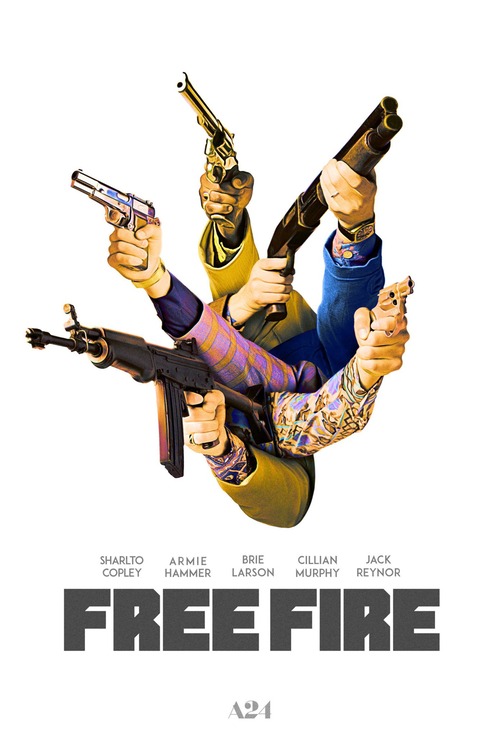
The company also knows to diversify within that brand. This isn’t your Fox Searchlights or your Sony Pictures Classics, where there’s almost too much that’s indistinguishable. With A24, even films seen by only a few feel singular in and of themselves. Free Fire is an action packed, guns-ablazing joy ride, with ravishingly badass posters to accompany. The Lovers is an odd yet deeply realized, deeply felt and deeply funny romantic comedy that’s a bit more friendly to an older crowd, featuring the ever wonderful Debra Winger and Tracy Letts. It Comes At Night haunts our paranoid nightmares, subverting horror expectations and getting people talking. Good Time is a neon trip — a frenetic, chaotic and deliciously addictive crime film with a Robert Pattinson we’ve never met before. And A Ghost Story transcends the dimensions of cinema, glaring into our bodies and our souls like only the most profound pieces of art can.

That’s only what A24 has released in 2017 so far. It would be tough to be evaluative of an upcoming slate, but it’s not surprising that A24 films are the current talk of the festival circuit, as the company has four more that could make their own weird and gleeful stamp on the year.

First, at the beginning of October, comes The Florida Project, from Tangerine director Sean Baker. A testament to diversifying, the film stars children, with the lead, Brooklynn Prince, being merely 7. Critics have already deemed it as one of the great films about childhood with others guaranteeing that Willem Dafoe is nominated for an Oscar.

A24/Courtesy

Nearing Halloween, the more horrific side of Yorgos Lanthimos, director of The Lobster, will be unveiled with The Killing of a Sacred Deer. A Cannes premiere like The Florida Project, Sacred Deer has been received with a bit less unanimity than Baker’s film, but the intensity of the divide makes it all the more fascinating. A24 is a distributor that will take chances, a distributor that wants to make “radical work,” and Lanthimos’ picture certainly falls in that realm.

As November comes, something quite special arrives: Greta Gerwig’s directorial debut Lady Bird. An incredibly successful writer and actor already, giving one of her most moving performances in A24’s 20th Century Women, Gerwig is a talent that needs further platform, and for good reason. Premiering at Telluride Film Festival and moving to Toronto International Film Festival, Lady Bird is one of the most lovingly spoken about films to have traveled to one or both of those cities. More than a few critics have deemed it their favorite of the Colorado festival, and as it’s traveled to Canada, some have even expected the film to resonate in a similarly way to the landmark Boyhood, which, in turn, could lead to a legitimate Oscar threat.

Wrapping up the busy year, A24 will release The Disaster Artist, the James Franco-directed-and-uarring film about the making of the iconically trashed The Room, in December. The film visited South by Southwest as a work in progress, and was lauded at the time. Screening as a prepared cut last night at Toronto International Film Festival’s Midnight Madness, the film received a standing ovation from the crowd, who stayed on their feet throughout the entire Q&A afterward, something many festival frequenters had never seen before. Maybe with The Disaster Artist, an A24 James Franco awards campaign could have some results. “Oh, hi Oscars.”

A24/Courtesy

No other distributor (and production company) garners buzz quite like this. The Shape of Water premiered to adoration, but no one is really mentioning Fox Searchlight. Call Me by Your Name is said to be one of the most emotionally affecting films of the year, but few go out of their way to talk about it within the context of the Sony Pictures Classics brand. None of this is to put down those films, but it really does make something clear.

A24 isn’t just a vehicle through which its movies are funneled. It becomes a part of the movies themselves, almost as an auteur figure behind them, which is undoubtedly a reason why, by the end of the year, A24 will be the studio that stands out the most. Its films are almost like events nowadays, something previously ascribed only to studio blockbusters.

But most importantly, A24 is making the movies fun again — not just the movies themselves, but the anticipation of them, the promotional and paratextual consumption of them and the discourse created in their aftermath. Movie-going isn’t just sitting in a theater; it’s everything else too. And if companies like A24 keep innovating, the movies might have a chance.

Featured image via A24.

Saoirse Ronan breaks from small town cage in first trailer for Greta Gerwig’s directorial debut ‘Lady Bird’

Greta Gerwig has had an incredibly successful acting and writing career, working on scripts with Noah Baumbach for Frances Ha and Mistress America, among others, and delivering wonderful performances in those films as well as, most recently, in 20th Century Women. And now, Gerwig is stepping behind the camera for her directorial debut Lady Bird, which is a semi-autobiographical story following Christine “Lady Bird” McPherson (Saoirse Ronan) as a high school senior trying to leave Northern California for the East Coast. A24 released the first trailer for Lady Bird today.

The film premiered at Telluride this past Friday, where many critics hailed it as their favorite of the Colorado film festival, which also played host to films like HostilesFirst They Killed My Father, Battle of the SexesThe Shape of Water and Darkest Hour. Variety has even posited Ronan as, currently, one of the stronger contenders for Best Lead Actress.

Lady Bird also stars Laurie Metcalf as McPherson’s mother — a central role as many are calling this a mother-daughter story, and praising Metcalf for her work — Tracy Letts as her father, Lucas Hedges as a good friend and Timothée Chalamet as a love interest. The film is set to screen at the Toronto International Film Festival later this week as well as at New York Film Festival in October before releasing on November 10.

Saoirse Ronan recently started filming the Beau Willimon written, Josie Rourke directed Mary, Queen of Scots, which is eyeing a 2018 premiere and also stars Margot Robbie and David Tennant. Greta Gerwig will provide voice work for Wes Anderson’s animated project Isle of Dogs, which will hit the big screen on March 23, 2018. A24 has a fairly full slate this fall/winter with The Florida ProjectThe Killing of a Sacred Deer and The Disaster Artist all set to release.

Featured image via A24.

Top ten films premiered at Telluride Film Festival since 2010

Amid the swaths of festivals, Telluride, taking place between September 1-4, stands out as an unpretentious yet incredibly prestigious venue for some of the most honest films of the year. Like the town in which it takes place, Telluride is small and intimate. It evokes the best of what a film community can be, in genuine artistry, but also in just being fans of movies and of movie-makers; it was a key moment in the great friendship between the La La Land and Moonlight creative teams, which maintained despite the audience split that sprouted during the awards season. And while many of the Oscar hopefuls look to the Venice Film Festival and the Toronto International Film Festival for their starts, the quieter premieres at Telluride often have the grander impact. Since 2010, the best of the best from Telluride Film Festival are breathtaking. From Oscar winners to profound independents to landmark documentaries, the top ten Telluride films of the last seven years show the best of what cinema can be.

10. Wild

Fox Searchlight Pictures/Courtesy

While many may point to Dallas Buyers Club and Big Little Lies when thinking of Canadian filmmaker Jean-Marc Vallée, it would be a shame to ignore the gem that is Wild. First and foremost, any film that features the sublime, timeless, astounding Laura Dern in even just a slightly weighty role is one to adore. But Wild crafts not only its character, Reese Witherspoon’s Cheryl, so instinctively, but it also crafts the journey of Cheryl so tenderly and affectingly. Cheryl confronts the wild in her long walk from the top of the U.S. to the bottom, and the film follows suit, embracing a sort of vulnerable physicality in its color palette, in its subtle sound and intimate cinematography. Wild may not be the most jaw-dropping or impressive film, but it’s one that finds its way underneath one’s skin and into one’s bones because it is so human.

— Kyle Kizu

9. Frances Ha

IFC Films/Courtesy

Frances Ha is director Noah Baumbach’s ebullient tribute to the cinema of the French New Wave. We follow the titular Frances (the incredible Greta Gerwig, who co-wrote the screenplay with Baumbach) as she meets friends, moves from apartment to apartment and tries to reconcile her dreams of dancing with the possibility that they’ll remain dreams and nothing more. Though the film is in black and white, the spread of emotions that Frances endures is hardly so — the film pinwheels from her trademark levity to crushing lows, before rising to a strained melancholy and finally settling on a relieved contentedness. That such dichotomies coexist in the film isn’t jarring, but rather endearing. We’ve all had nights that started out perfectly, but then take a hard left into awfulness that only seems to get worse, and that’s a sentiment that the film understands and addresses with humor and sensitivity. Befittingly, the film isn’t reliant on plot, but that’s okay — we’re happy to have known Frances, if but for an hour and a half.

— Harrison Tunggal

8. The Descendants

Fox Searchlight Pictures/Courtesy

Against all odds, Alexander Payne’s 2011 film The Descendants pairs adultery, comatose spouses and Hawaiian real estate in a simultaneously heartwrenching and hilarious examination of what family really means. The film follows Matt King (George Clooney) as his wife is injured in a jetskiing accident and he is forced to decide whether or not to leave his now comatose wife on life support — a decision made more difficult by the realization that she had been having an affair. Clooney and Shailene Woodley, in arguably both their finest work to date, carry the film on their transparently expressive faces, captured lovingly in close-up by cinematographer Phedon Papamichael. True to the book on which it is based, The Descendants almost veers too far into cruel, biting satire at times, but no one is better suited to walk the balance between bleak humanity and the humor found in everyday life than Alexander Payne. While certain scenes stand out as all-timers (Clooney’s famous hospital monologue, Woodley’s character revealing her mother’s affair), The Descendants in its entirety is a hard look at dealing with the past, managing the present and confronting the future.

— Kate Halliwell

7. Steve Jobs

Universal Pictures/Courtesy

Steve Jobs had such a dramatic journey to the big screen — an intensely buzzed-about Aaron Sorkin script originally connected to David Fincher and with Leonardo DiCaprio and Christian Bale rumored to star. But the creative team it ended up with was a perfect match. Danny Boyle’s high-energy direction scores Jobs with an electric edge and Michael Fassbender transforms subtly yet entirely, embodying the icon with a domineering physicality, especially in vocal tone, while deconstructing his problematic persona and humanizing his core — not necessarily sacrificing one for the other. The film has massive ambitions, with a story structure similar to a play and carrying a character in light of Citizen Kane. It might not reach all of its goals, but it finds a place in contemporary cinema that so many films have tried for but failed.

— KK

6. Under the Skin

A24/Courtesy

On very simple terms, Under the Skin is an astonishing vehicle for the auric, subtle physicality that Scarlett Johansson can take hold of in a performance, as well as for the viscerally invasive work of composer Mica Levi — many critics still cite her score as one of the best of the 21st century. But, quite obviously, Under the Skin is anything but simple. Delving deep into the avant garde, as well as other more visually focused traditions, Jonathan Glazer’s sci-fi picture, about an alluring woman, is oftentimes terrifying without us even realizing how intensely so until afterward, or until the pop of a body contorted by forces beyond its control. As viewers, we oftentimes feel like a victim trapped beneath — a purposeful effect that produces a pure sense of the image, oftentimes simple in color and composition but wildly unnerving in context, that only cinema could. Of course, this leaves little easy explanation and few paths for traditional absorption, making Under the Skin difficult to encounter. But if we surrender ourselves to visual language, the film will prove deeply human, without much of the sentimentality, and gendered in its experience, deconstructivist in its angle and, honestly, just fucking weird — in a good way.

— KK

5. Prisoners

Warner Bros./Courtesy

The sense of mounting dread that director Denis Villeneuve builds in Prisoners is staggering to behold. Drenched in darkness and shadow by the master himself, Roger Deakins, this film transports the viewer into a world of ubiquitous horror, one where corpses fill basements, families descend into violence and even moments of reprieve contort into the realization that we’re all shackled to those we love, for better or worse. This is a film where your heart keep sinking to depths you didn’t know existed, right to its final shot. Prisoners also sports a stellar cast firing on all cylinders — Hugh Jackman’s intensity makes his performance in this film one of his finest, Jake Gyllenhaal showcases the cold determination he would later dial to eleven in Nightcrawler and Paul Dano ratchets up the tension by keeping the audience on its toes. Additionally, Viola Davis brings her eminent gravitas while Terrence Howard matches Jackman’s fear and desperation as they search for their missing daughters. Prisoners is arguably Denis Villeneuve’s best film, and we can’t wait to see how his sensibilities translate to Blade Runner 2049 and other future projects.

— HT

4. Anomalisa

Paramount Pictures/Courtesy

This stop-motion picture is difficult to confront, venturing into the abstract in many areas. But, as one should expect with Charlie Kaufman, Anomalisa, a film without actual humans, is filled with a humanity unlike most other films. It is, in large part, because of the voice work. David Thewlis and Jennifer Jason Leigh provide an affectingly raw basis within this world, conveying vulnerability and the weight of the human condition through tiny inflections. And Tom Noonan, literally voicing every other figure, is shockingly hilarious and horrifyingly scary at the same time. Yet, the voices become that profound because of the imagery within which they inhabit. Kaufman and co-director Duke Johnson frame each shot with a deep understanding of theme, that everything so blandly and terrifyingly blends together, that the world is unrewarding and depressing, that finding someone within the void is miraculous and losing them to the blend is a nightmare. The amalgamation brings about an intimacy that only a masterful film could build.

— KK

3. Room

A24/Courtesy

Book-to-movie adaptations, as a rule, are difficult to pull off, and that challenge increases exponentially when the source material in question is narrated in entirety by a five year old boy with a limited understanding of the world. It gets even harder when that world consists of a tiny one-room shed, and the boy’s mother — the room’s only other occupant — chooses to raise him as if that one room really is the entire universe. So begins Lenny Abrahamson’s adaptation of Room, starring Jacob Tremblay and Brie Larson as a mother and son held in captivity until their eventual escape. Room is effectively split in two halves, which places the duo’s plotting and escape at odds with their tentative transition back into the outside world. The film would go on to win Larson her first Oscar and cement Tremblay’s place as Hollywood’s cutest kid, but it served as far more than a vehicle for its stars-to-be. Bleak, hard-to-watch moments combine with an enduring sense of childlike curiosity in what is already deservedly considered to be one of the best book adaptations of all time.

— KH

2. The Act of Killing

Final Cut for Real/Courtesy

The Act of Killing is a difficult film to watch, and if you’re at all connected to the killings that took place in Indonesia from 1965-1966, then Joshua Oppenheimer’s documentary is downright excruciating. The film’s two main subjects, Anwar Congo and Herman Koto, belonged to a government death squad that extorted from and killed more than one million communists and Chinese Indonesians. They gloat about the lives they took and how they took them, going to obscene lengths to reenact their methods. It’s a sick parody of cinephilia — Congo and Koto claim to be inspired by the violence in the films they idolized, and some of the reenactments are draped in the trappings of their favorite genres. And these are just barely the reasons why The Act of Killing is a disturbing watch — ultimately, we’re left wondering if there’s redemption in remorse. After seeing the utter impunity of the murderers, such a question becomes disturbingly difficult, if not impossible, to answer. Unpleasant as it may be, The Act of Killing is truly an essential film, reminding us that the soul is at stake when blind nationalism supersedes morality.

— HT

1. Moonlight

David Bornfriend/A24/Courtesy

With a rare 99 on Metacritic, Barry Jenkins’ Moonlight is cinematic perfection. For anyone who’s seen the film, such a statement stands on its own, though additional validation comes from its historic Best Picture win at the 89th Academy Awards. But forget the craziness surrounding the moment of its victory — such things are much too loud for a film like Moonlight. It is a film predicated on an intimate viewing experience, one in which quiet subtleties in the performances of its all black cast and precise details in the filmmaking precipitate an immense significance. From the close-ups of Trevante Rhodes and Andre Holland as their characters reunite, we see heartbreak and hope at the same time, and years of toxic, performative masculinity erode with just one look. From the final embrace of these two men, we see a moment of LGBTQ+ representation that is executed with the utmost sensitivity and tenderness. Then there’s James Laxton’s cinematography, where a shallow depth of field puts us with the characters, exacting a sense of empathy that lends the film its total hold over our emotions. It is impossible to overstate the significance of Moonlight, especially when empathy and sensitivity are becoming ever rarer, but with Barry Jenkins behind the camera, there’s hope that such qualities will persevere, at least on the big screen.

— HT

Featured image (modified) via Ken Lund.

First look at Saoirse Ronan in ‘Mary, Queen of Scots,’ scripted by ‘House of Cards’ creator

The first look of Saoirse Ronan, two-time Oscar nominee for her performances in Atonement and Brooklyn, in her new film Mary, Queen of Scots has dropped. The historical drama began filming on August 14 and comes from independent studios Focus Features and Working Title, who have worked together in the past on notable films such as The Theory of EverythingThe World’s End and Tinker Tailor Soldier Spy, and will release Victoria and Abdul and The Darkest Hour later this year.

Beau Willimon, writer of The Ides of March and creator/showrunner of House of Cards until his exit after season 4, wrote the script for the film. British theatre director and artistic director of the Donmar Warehouse Josie Rourke will make her feature debut. Ronan will be joined by Jack Lowden, who appeared this summer in Dunkirk, as well as Joe Alwyn, David Tennant, Guy Pearce and Margot Robbie as Queen Elizabeth I.

Ronan will appear later this year in On Chesil Beach, a film from fellow English theatre director Dominic Cooke, when it premieres at Toronto International Film Festival in September. She’ll also star in Greta Gerwig’s directorial feature Lady Bird, from A24, which releases on November 10.

Look below for the first image of Ronan and the official synopsis of Mary, Queen of Scots:

Saoirse Ronan Mary Queen of Scots

John Mathieson/Focus Features/Working Title/Courtesy

Mary, Queen of Scots explores the turbulent life of the charismatic Mary Stuart. Queen of France at 16 and widowed at 18, Mary defies pressure to remarry. Instead, she returns to her native Scotland to reclaim her rightful throne. But Scotland and England fall under the rule of the compelling Elizabeth 1.  Each young Queen beholds her “sister” in fear and fascination. Rivals in power and in love, and female regents in a masculine world, the two must decide how to play the game of marriage versus independence. Determined to rule as much more than a figurehead, Mary asserts her claim to the English throne, threatening Elizabeth’s sovereignty. Betrayal, rebellion, and conspiracies within each court imperil both thrones – and change the course of history.”


Willem Dafoe plays father figure in ‘The Florida Project’ trailer

In 2015, director Sean Baker released his film Tangerine, shot on augmented iPhones, to some of the best critical success of the year, further progressing his career as an indie filmmaker to look out for.

And look out for him we must, as A24 has just released the trailer for Baker’s follow-up film The Florida Project, which follows young Moonee (Brooklynn Prince) and her mother Halley (Bria Vinaite) during their stay at “The Magic Castle,” a motel run by Bobby (Willem Dafoe). As Halley finds herself falling into troubling circumstances, Bobby looks to step up to not only help her, but to be a father figure to the many children at the motel. Yet, it seems as though Moonee has no problem creating her own fun with her imagination.

The Florida Project premiered at Cannes Film Festival to outstanding reception. It currently sits at 96% on RottenTomatoes with 22 fresh reviews out of 23 total, and at a score of 91 on Metacritic with 9 positive reviews. The film then went to the Champs-Élysées Film Festival in France and will visit the Toronto International Film Festival in September before a limited theatrical release on October 6, 2017.

Willem Dafoe has already received extensive praise for his performance, with many calling him a near-lock for an Oscar nomination. Some critics have predicted the film to be nominated for Best Picture.

Baker shot The Florida Project on 35mm film, but it is unclear how many theaters will be able to project it in that format.

A24’s A Ghost StoryMenashe and Good Time are still in theaters. The production-distrubtion company will release Yorgos Lanthimos’ The Killing of a Sacred Deer, which premiered at Cannes to slightly divisive reviews and stars Colin Farrell, Nicole Kidman and Barry Keoghan (of Dunkirk), on October 27. Its other end of the year plays include Greta Gerwig’s directorial debut Lady Bird, releasing on November 10, and the James Franco directed-starring The Disaster Artist, which premiered as a work-in-progress at South by Southwest to nearly unanimous acclaim and will visit Toronto International Film Festival, releasing on December 1.

Recent Entries »